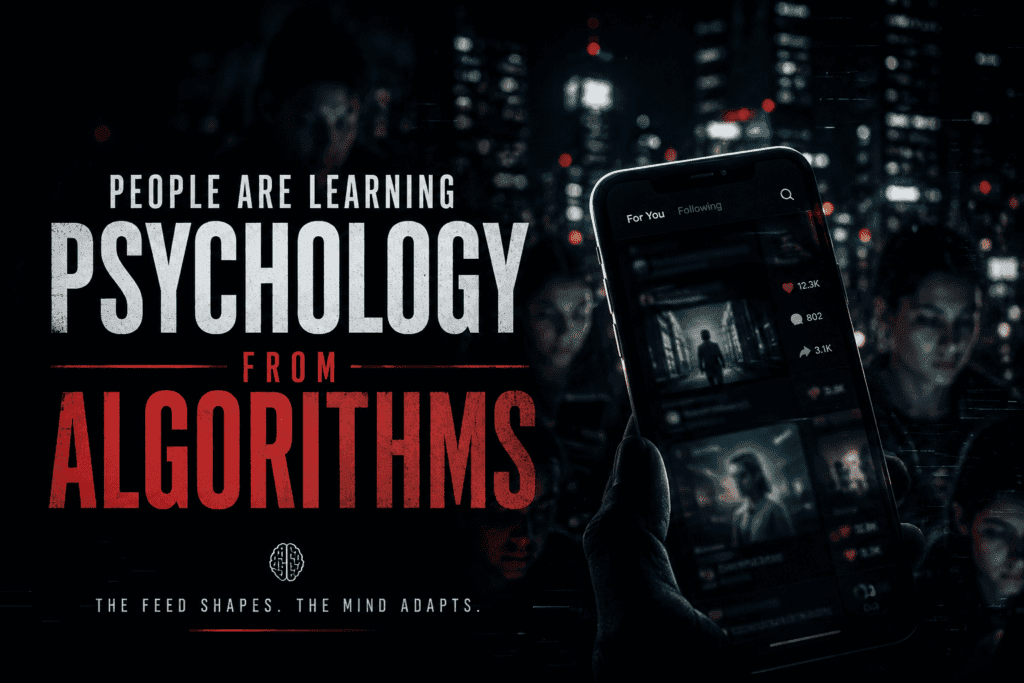
Psychology from algorithms is becoming one of the biggest hidden effects of the modern internet era. Technology changed more than communication.
It changed attention, behavior, identity, validation, and even the way people understand emotion online. Modern algorithms no longer just recommend content. They quietly shape attraction, outrage, insecurity, confidence, comparison, and social behavior in real time.

Maybe one of the biggest psychological shifts of the internet era is this:
People are learning psychology from algorithms.
Not from life experience.
Not from emotional maturity.
Not from wisdom.
But from digital systems designed to maximize engagement and attention.
That changes everything.
Algorithms Reward Emotion More Than Balance
The modern internet rewards emotional intensity.
Not calmness.
Not reflection.
Not balanced thinking.
Outrage spreads faster.
Conflict gains visibility.
Extreme opinions travel further than thoughtful conversations.
Algorithms push content that keeps people emotionally engaged because emotional reactions increase watch time, comments, shares, and clicks.
Over time, people unconsciously begin copying the behavior that receives attention online.
That is where algorithmic psychology starts becoming dangerous.
People begin reacting for visibility instead of understanding.
The internet slowly trains behavior through repetition.
Eventually, some people stop expressing authentic emotions naturally. Instead, they perform emotionally in ways the algorithm rewards.
Social Media Turned Validation Into Numbers
Before social media, validation was mostly personal and human.
Today, validation is measurable.
Views.
Likes.
Followers.
Comments.
Shares.
Social media transformed attention into visible digital currency.
That psychological shift affects people more than many realize.
A post performing badly can affect mood.
A viral post can temporarily increase confidence.
Silence online can feel like rejection.
Many people now subconsciously connect self-worth to online engagement.
Algorithms did not create insecurity completely, but they amplified comparison culture globally.
People Now Learn Human Behavior From The Internet
A large number of people now learn communication and psychology from online content instead of real-world experiences.
They learn:
- attraction from viral relationship clips
- confidence from internet personalities
- masculinity and femininity from trend culture
- success from aesthetics and luxury content
- communication styles from short-form videos
The feed becomes a psychological environment.
The problem is that algorithms do not necessarily promote healthy behavior.
They promote engaging behavior.
There is a major difference between the two.
The internet rewards content that keeps users watching longer, reacting faster, and scrolling continuously.
That means emotional intensity often performs better than emotional balance.
Attention Became A Modern Battlefield
Every major platform today competes aggressively for human attention.
Notifications.
Autoplay systems.
Infinite scrolling.
Algorithmic recommendations.
Short-form content loops.
Modern technology is carefully designed to reduce the gap between curiosity and consumption.
The result is constant mental stimulation.
Many people now struggle to sit quietly without checking their phones.
Silence feels uncomfortable.
Stillness feels unnatural.
Boredom feels unbearable.
The algorithm fills every empty moment with stimulation.
Over time, this affects concentration, emotional regulation, and even self-awareness.
Algorithms Are Quietly Shaping Identity
One of the most powerful effects of algorithmic systems is identity shaping.
Repeated exposure changes perception.
The more people consume certain content repeatedly, the more those ideas influence worldview and behavior.
Algorithms create digital environments around users.
Different people can exist in completely different psychological realities online while living in the same physical world.
That is one of the strangest effects of the internet age.
The Real Psychological Shift Of The Internet Era
The most dangerous part is that most people do not notice any of this happening.
Algorithmic influence rarely feels aggressive.
It feels normal because it happens gradually through repetition.
One recommendation.
Another viral clip.
Another emotionally charged post.
Over time, digital behavior slowly becomes human behavior.
That may be one of the biggest truths about modern technology.
Algorithms are no longer just recommending content.
They are shaping attention, emotion, identity, validation, and modern psychology itself.
And many people are learning psychology from algorithms without even realizing it.
— Daddieshinor